Marker Learning
Write-As-You-Go Reporting
A workflow bet validated by 15% WAU growth. It took convincing.
Role:
Senior Product Designer
Team:
Product Manager,
Engineers,
Visual Designer,
UX Writer
Duration:
2 months
OVERVIEW
Write-as-You-Go let school psychologists start drafting reports before all their documents arrived. It removed the biggest barrier to getting started and lifted weekly active users 15% from Alpha to Beta. The real win was what it confirmed: psychologists don't need a new workflow. They need a tool that fits the one they already have.
To understand why the redesign mattered, it helps to know what Marker does.
WHAT’S MARKER?
Special education reporting made faster, clearer, and more compliant
Marker helps school psychologists conduct faster, more accurate Learning Disability evaluations. Only 5% of students with a learning disability actually receive a diagnosis. Marker exists to close that gap.
But faster evaluations don't start with better tools. They start with a workflow that fits how psychologists actually work. The original product didn't.
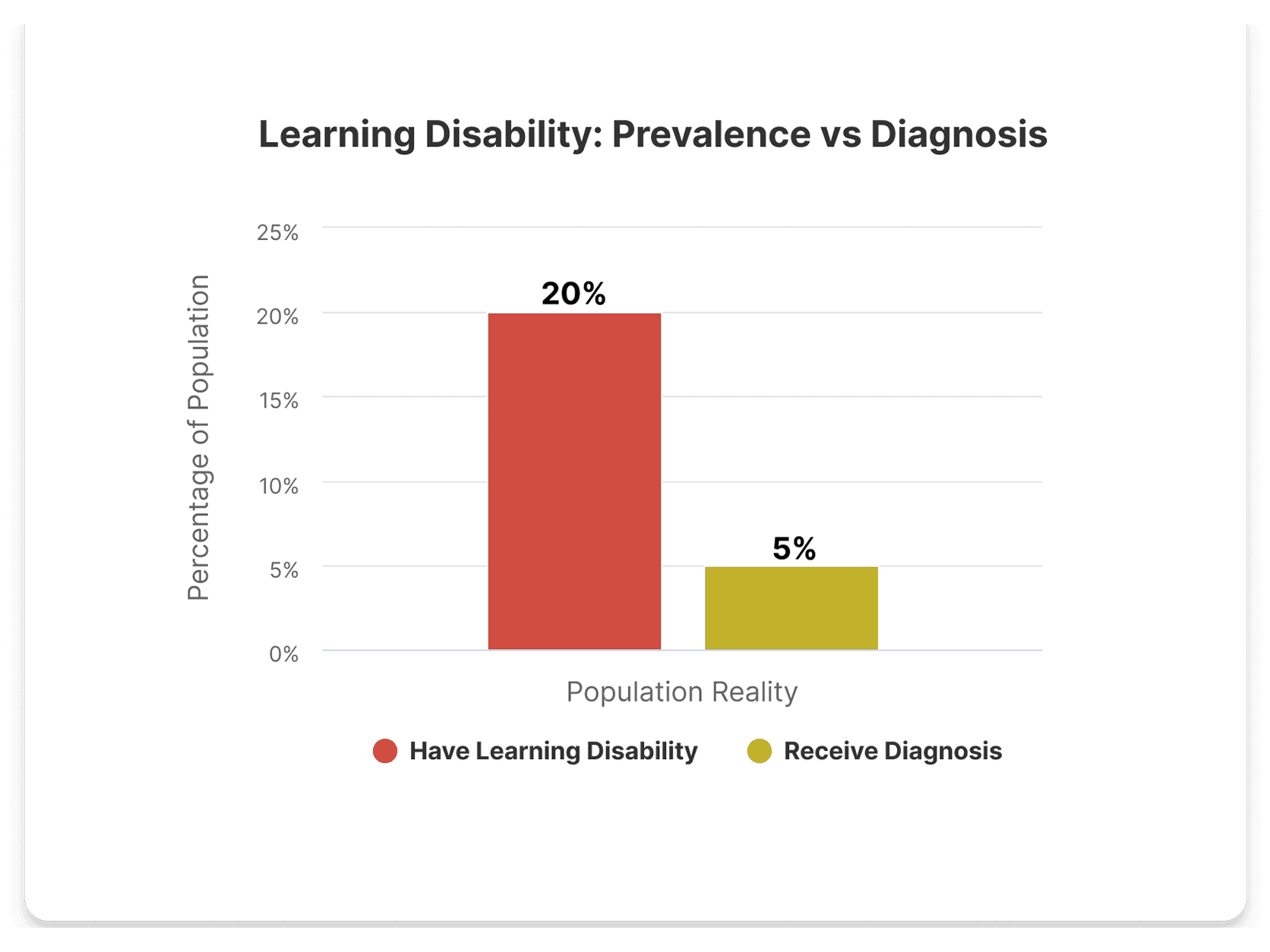
Here's what it got wrong.
PROBLEM
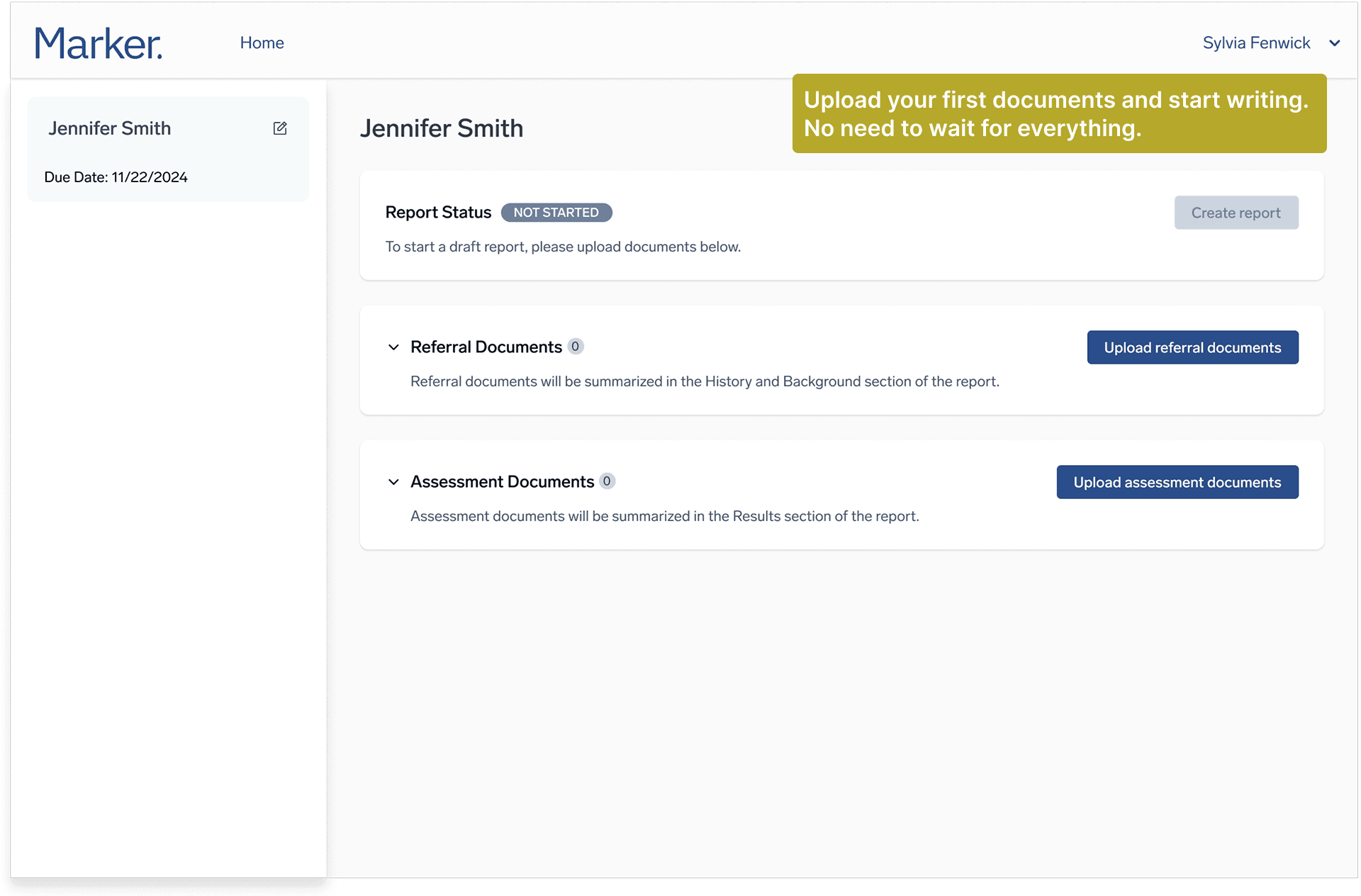
The product required all documents upfront. Documents never arrive all at once.
School psychologists work under legally-mandated deadlines. They spend weeks chasing documents from parents, teachers, and administrators, and the pieces arrive one at a time.
Marker's original workflow required every document to be uploaded before writing could begin. If a new assessment showed up mid-process, there was one option: delete the draft and start over.
We heard the same story in every user interview. A psychologist would get two weeks into a report, a new document would arrive, and they'd either skip Marker for that case or lose hours of work. The product wasn't built for how they actually worked.
So we rebuilt the first move.
SOLUTION
A flexible workflow that fit how psychologists already worked.
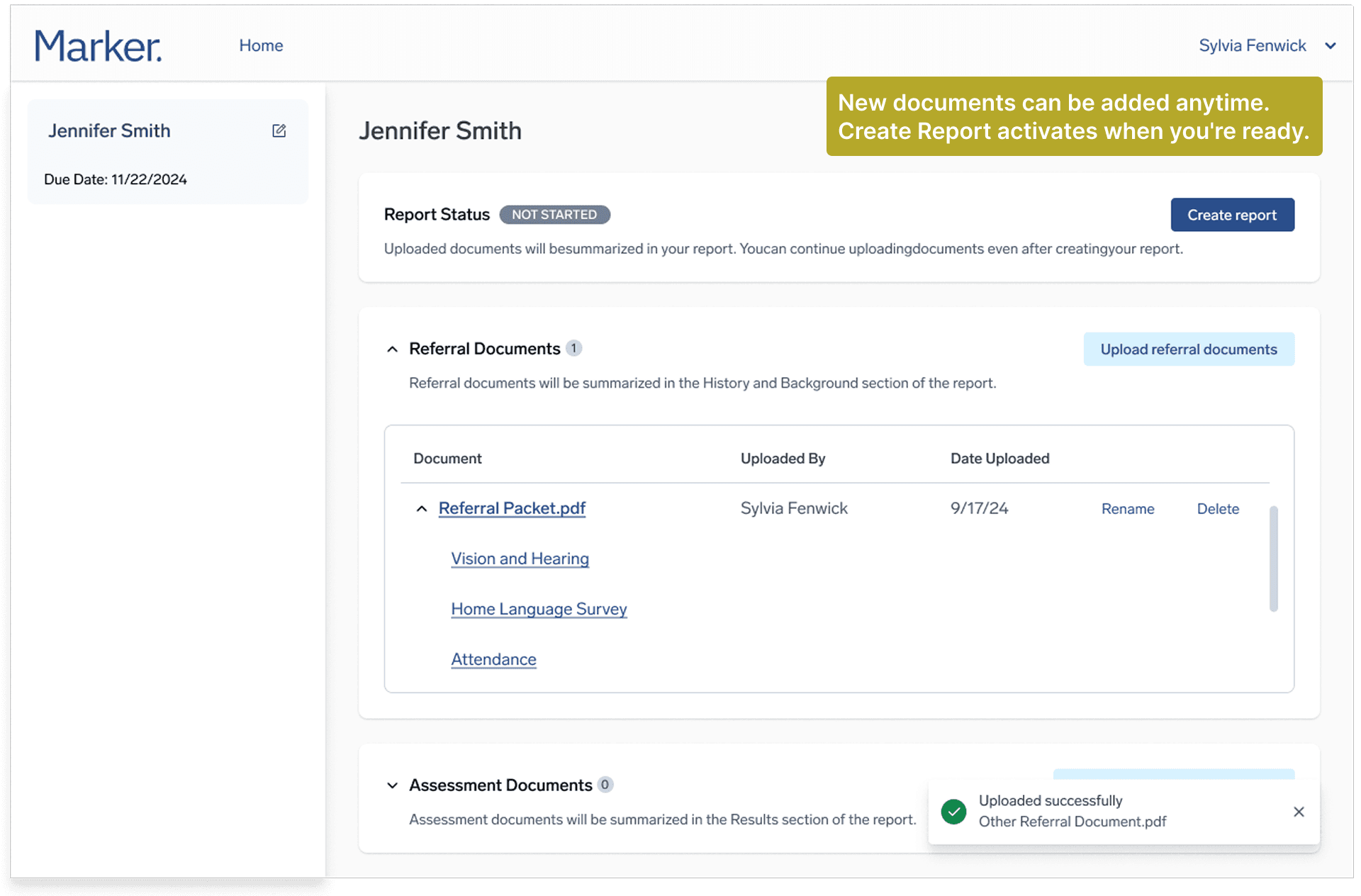
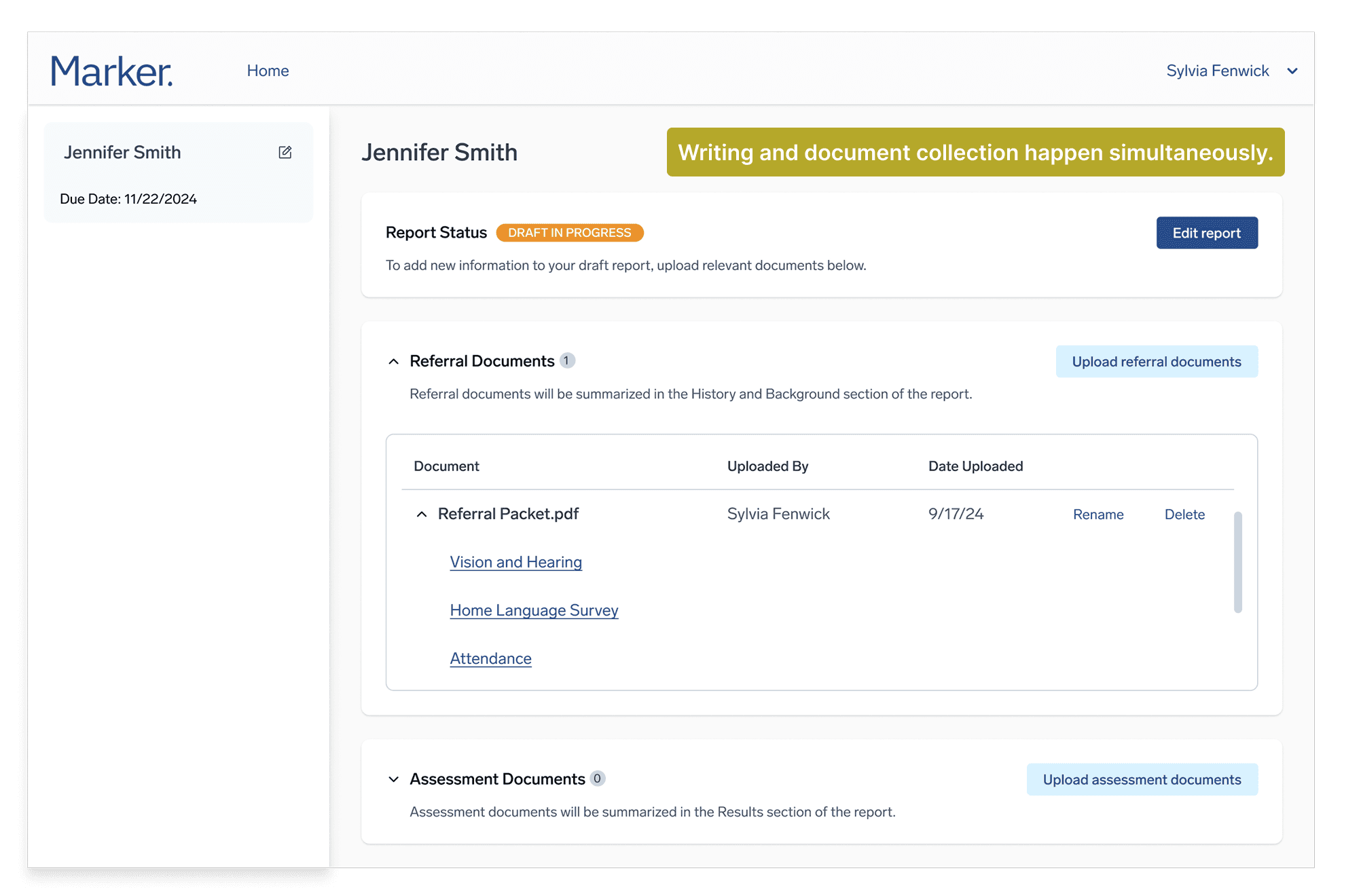
Instead of gating the whole report behind a complete document set, we broke writing and collecting into parallel tracks. Psychologists could upload what they had, start drafting, and keep adding documents as they arrived. No more waiting. No more starting over.
But the launch wasn't the finish line.
ITERATIONS
Shipping was the beginning, not the end.
Beta surfaced three follow-on needs, and they all pointed at the same insight: psychologists needed the product to work the way they already did.
Enhancing the case table
Beta users told us they couldn't organize or prioritize growing caseloads. We added sorting, filters, and key columns based on what they asked for directly.
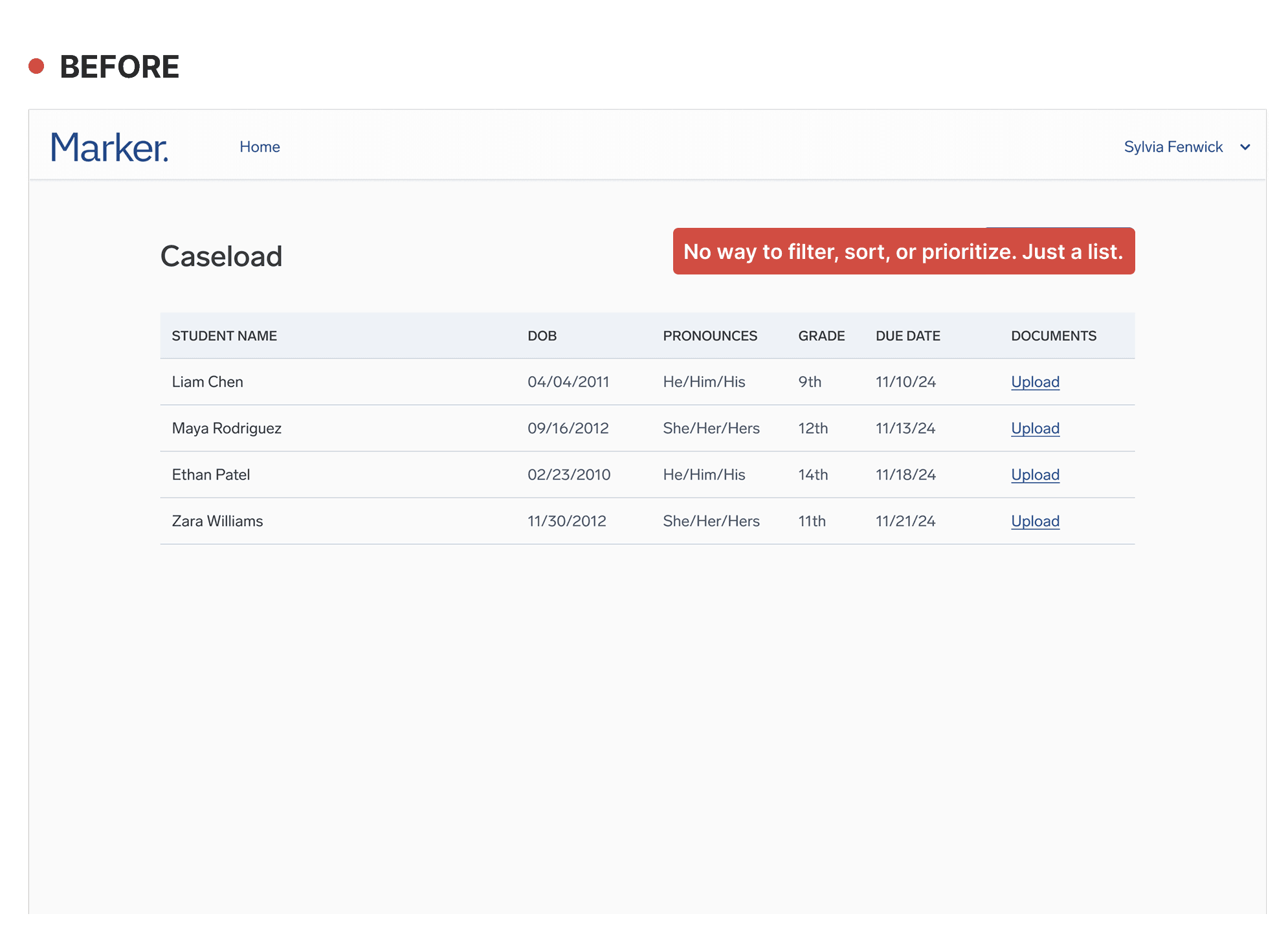
A minimal table with no filters, no status visibility, and no way to prioritize work.
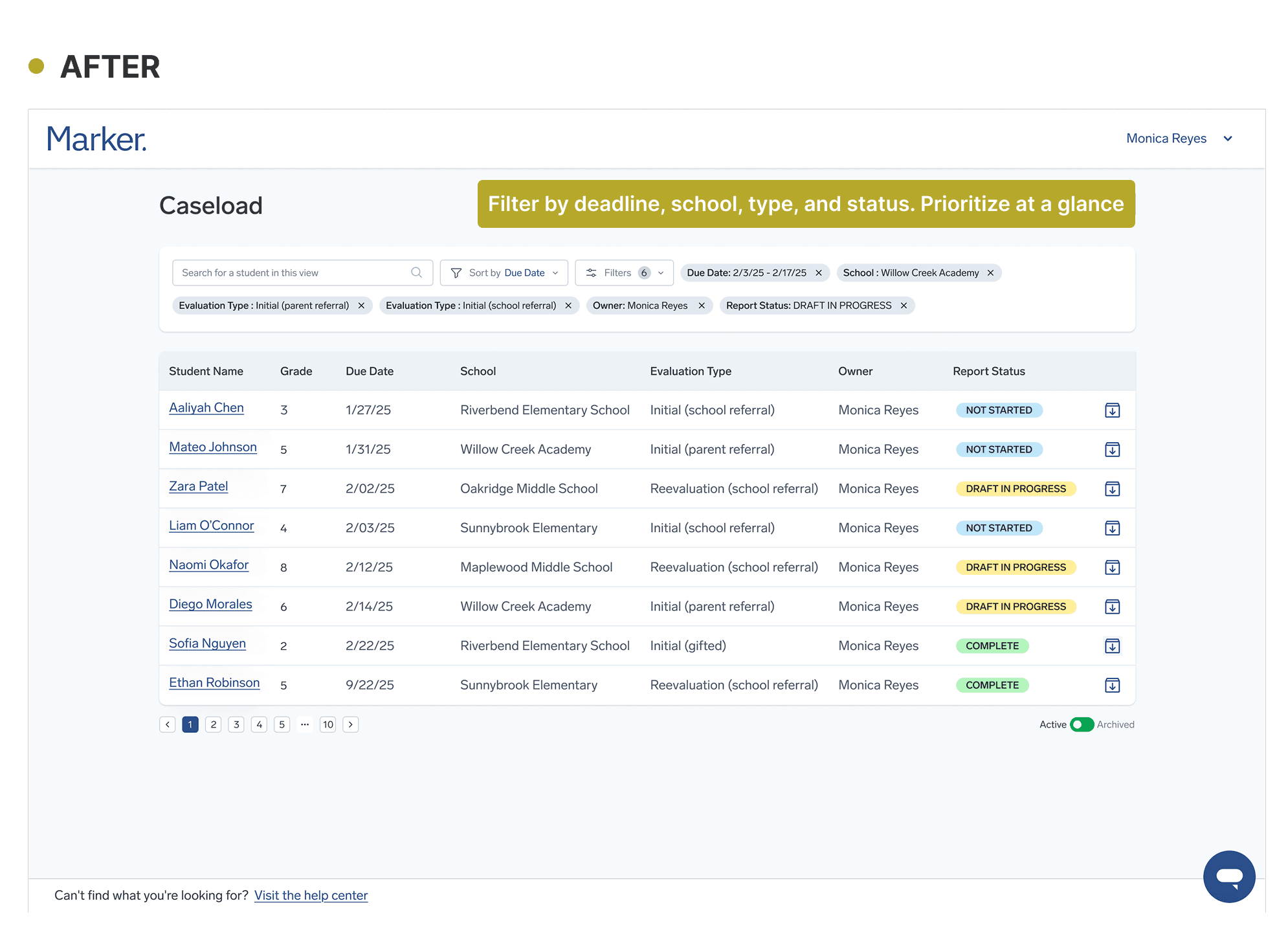
Sortable columns, active filters, and Report Status badges gave psychologists real control over their caseload.
Improving discoverability
As caseloads grew, new students got lost in the list. A simple highlight state fixed it, and became the foundation for features we added on top of the case table later.
Evolving the Student Page
Psychologists naturally kept checklists and notes as they evaluated students. We explored pulling both directly into the page so the tool matched the habit.
The follow-ons mattered, but the real question was whether the core bet worked.
RESULTS
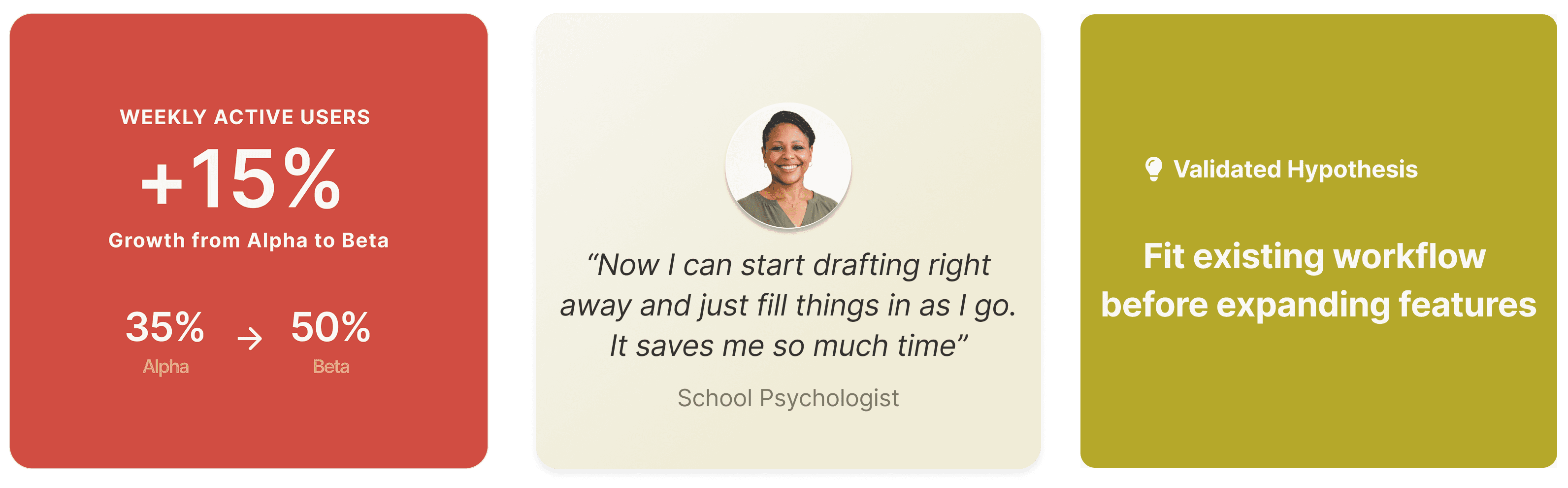
A 15% lift in weekly active users told us the workflow call was right.
Write-as-You-Go shipped to strong beta feedback. Weekly active users climbed from 35% to 50%, a 15% lift Alpha to Beta.
Psychologists could finally work the way they always had, and the product worked around them instead of the other way around.
REFLECTION
The hardest part wasn't the design. It was identifying the right problem to solve.
Leadership wanted new features. The data said the workflow was broken. Advocating for the right problem was what made the difference, even when it was harder to build and required cross-squad alignment.
Fitting an existing workflow is harder than designing a new one. It's also the only way to drive real adoption.